
Language and AI
Artificial intelligence is changing language learning and the wider field of language education. From AI-powered language learning tools and conversational systems to automated exercises and personalized learning platforms, technology is influencing how people study languages. In my articles, I examine these developments, their practical value, their limitations, and their implications for the future of language learning.
- The Importance of Human Guidance in Language Learning in the Age of AI
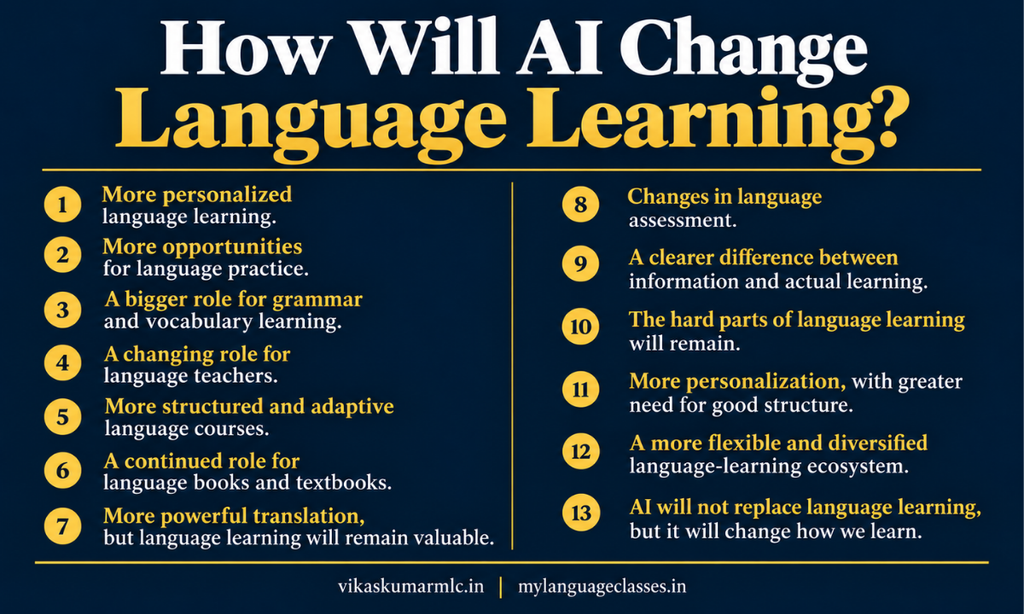
- How AI Will Change Language Learning: My Predictions
- Can AI Replace Language Teachers? Essential Implications for Learning
Artificial Intelligence and the Changing Landscape of Language Learning
Artificial intelligence is changing how people access language education, interact with learning resources, and study new languages. AI-powered applications, conversational systems, translation tools, and automated learning platforms have introduced new ways to approach different aspects of language learning. These developments are also changing what learners expect from educational products and services.
However, the growing presence of artificial intelligence raises important questions about the actual process of learning a language. Technology can make information easier to access, provide immediate assistance, and support certain learning activities. Yet, developing language ability involves much more than accessing explanations or receiving automated responses. Learners still need grammatical knowledge, vocabulary, reading, communication, practice, and meaningful engagement with the language.
The relationship between artificial intelligence and language learning deserves a closer examination. How are these technologies changing language education? What can learners genuinely gain from them? How might they influence the responsibilities of educators and the direction of the language-learning industry?
I explore these questions through my articles on artificial intelligence and language learning. Read my related articles to understand the developments, examine different perspectives, and learn more about the changing role of technology in language education.
Applications of AI in Language Education
Artificial intelligence is being used in several areas of language education. AI-powered tools can help learners practice conversations, receive explanations, check written work, translate unfamiliar expressions, and access language resources. Some platforms also use AI to adjust activities according to a learner’s performance and provide immediate feedback.
These applications can support different parts of language learning, but their usefulness depends on how they are designed and used. For example, an AI conversation tool can provide opportunities to practice forming sentences, while a grammar tool can explain structures and identify common errors. Translation tools can also help learners understand unfamiliar words and expressions, although translations may not always capture the intended meaning or cultural context.
I examine these applications in my articles on AI and language education, looking at what these tools can offer learners and how they fit into the wider process of learning a language. Read the related articles to explore the practical uses of AI across different areas of language learning.
The Limitations of AI in Language Learning
Although artificial intelligence can support several learning activities, it has limitations that learners and educators need to understand. AI tools can generate explanations, correct sentences, and simulate conversations, but their responses are not always accurate. They may also miss differences in context, tone, cultural meaning, and natural language use.
Another limitation concerns the development of actual language ability. Receiving an explanation or reading an AI-generated response does not automatically develop the knowledge needed to understand and use a language independently. Learners still need to study grammar, build vocabulary, read, listen, communicate, and practice regularly.
AI can be a useful part of language education, but its role should be understood realistically. In my articles, I examine these limitations and discuss the gap between what AI tools promise and what learners need to develop genuine language ability. Explore the related articles to read more about these issues.
Human Guidance, Culture, and Communication
Language learning involves more than understanding words and producing grammatically correct sentences. Learners also need to understand how language is used in different situations, how meaning changes with context, and how cultural and social factors influence communication.
AI tools can provide explanations, generate examples, and simulate conversations. However, human interaction remains important in developing communication skills and understanding the practical use of a language. Teachers can identify individual learning difficulties, explain complex ideas, provide meaningful feedback, and guide learners according to their needs. Cultural knowledge also helps learners understand expressions, social expectations, and the differences between formal and informal communication.
In my writing, I examine why human guidance and cultural understanding remain important as AI becomes more common in language education. Read the related articles to explore the relationship between technology, teachers, culture, and communication in language learning.
Artificial Intelligence and the Future of Language Education
Artificial intelligence will continue to influence how languages are taught, studied, and practiced. New tools may provide more personalized learning experiences, improve access to educational resources, and support teachers in preparing lessons and learning activities. These developments could also change how language education is delivered and how learners interact with educational institutions.
However, the future of language education will depend on how these technologies are used. The availability of AI tools does not remove the need for structured learning, grammatical knowledge, regular practice, human guidance, and meaningful communication. Educational methods must continue to focus on developing actual language ability rather than simply making learning activities faster or more convenient.
My articles examine these changes and the questions they raise for learners, teachers, and the language-learning industry. Read my writing on AI and language education to understand the possibilities, limitations, and wider implications of this technological shift.
Explore Articles on Language and AI by Vikas Kumar
Artificial intelligence is becoming an important part of language education, and its influence deserves careful examination. Understanding this change requires looking at both the possibilities of technology and the realities of how people learn languages.
Through my articles, I examine AI-powered learning tools, the role of human guidance, the limitations of automated systems, and the future of language education. I also explore how technology can support learners while keeping the development of genuine language ability at the center of education.
Explore the articles on this page to read my views, examine different developments, and understand the changing relationship between artificial intelligence and language learning.
© 2026 Vikas Kumar·